Dancer and Gymnast Foot & Ankle Injuries: Advice from a Specialist Podiatrist

Dancer and Gymnast Foot & Ankle Injuries: Advice from a Specialist Podiatrist
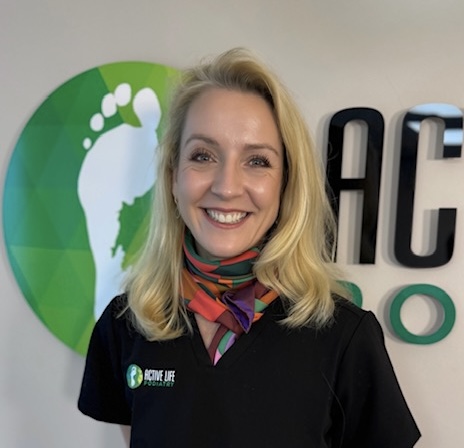
Why are dancers and gymnasts so prone to foot and ankle injuries and when is pain more than just a passing niggle? Penny is our in-house dance, gymnast and sports injury specialist. As a former ballet teacher and examiner, she’s an advocate for helping people stay pain-free.  

In this blog, Penny answers the most common questions about injury prevention, early warning signs, orthotics and keeping your feet performance-ready. 

1. Why do dancers and gymnasts get so many foot and ankle injuries, and how can they prevent them? 

Dancers and gymnasts place extraordinary demands on their feet and ankles. As I often say, the people who do the most washing up tend to break the most glasses. It’s not because they’re careless; it’s simply because they’re using them far more often. The same principle applies to the feet and ankles of dancers and gymnasts.  

Their sports require repetitive jumping, landing, turning, balancing and working at the extreme ranges of movement, often for many hours each week. The foot and ankle are repeatedly exposed to high forces, sometimes in positions that most people would never achieve.

Injury risk increases when factors such as fatigue, rapid increases in training load, inadequate recovery, poor scheduling of training and performances, suboptimal nutrition, insufficient strength, technique errors, unsuitable footwear or returning too quickly after injury are added into the mix.

The best strategies include sensible load management, good strength and conditioning, adequate rest and sleep, proper nutrition, addressing small problems before they become major injuries and ensuring technique is regularly monitored and refined.

2. When should a dancer or gymnast see a podiatrist instead of just resting?

Rest may be appropriate for minor aches and pains. However, if symptoms persist for more than a week or two, repeatedly return or affect performance, it’s worth seeking professional advice.

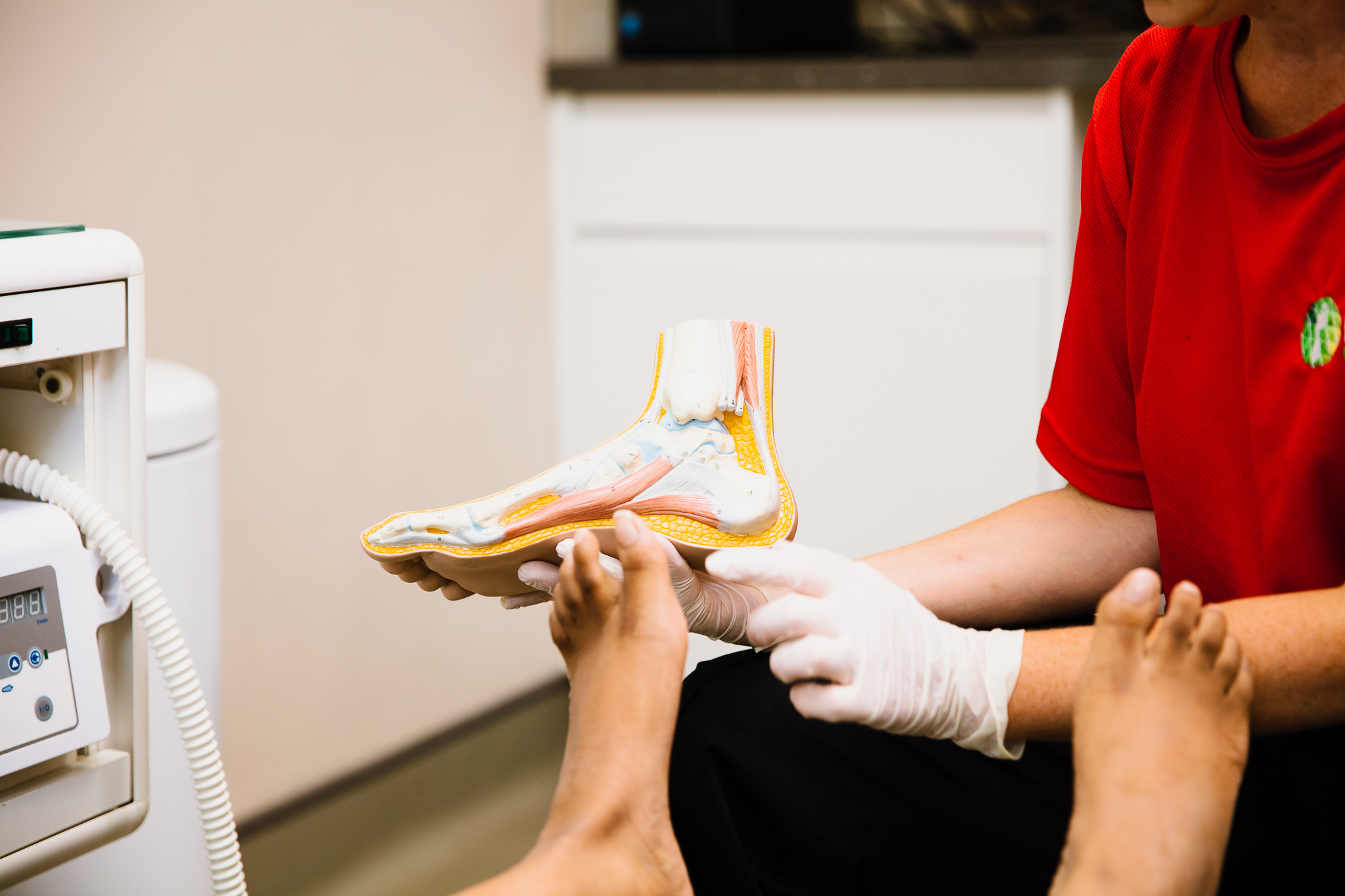
A musculoskeletal podiatrist who understands the demands of dance can assess how the foot, ankle and entire lower limb function together. We look at movement patterns, strength, flexibility, training loads, footwear and biomechanics to identify why a problem has developed. 

Early assessment can often prevent a small issue from becoming a prolonged injury resulting in significant time away from training. 

3. What are the most common injuries you see in dancers and gymnasts?

The most common problems I see tend to fall into two categories: injuries and general foot health concerns. While many of these are shared by dancers, gymnasts and other athletes, dancers can also present with issues related to pointe work and the demands of repeatedly working at the extreme ranges of foot and ankle movement. 

Injuries 

  • Ankle sprains and instability 
  • Achilles tendon pain 
  • Plantar heel pain 
  • Stress reactions and stress fractures 
  • Tendon injuries around the foot and ankle 
  • Joint irritation and impingement 
  • Toe injuries, particularly involving the big toe and/or second metatarsal joint 
  • Sesamoid injuries 

General Foot Health Concerns 

  • Blisters, corns and skin problems 
  • Nail trauma and ingrown toenails 
  • Concerns regarding foot appearance and aesthetics 
  • Bunions 

Many of these conditions can be managed successfully when identified early, which is why I encourage dancers and gymnasts not to ignore persistent symptoms.  

4. What’s one mistake you see dancers or gymnasts make with their foot health?

Ignoring the early warning signs. 

Many performers are incredibly disciplined and resilient, which is a strength, but it can also mean they normalise pain and continue training through problems that would be much easier to treat in the early stages. 

A small ‘niggle’ is often the body’s way of asking for attention. Addressing issues early is usually far more effective than waiting until they become performance-limiting injuries. 

5. Can orthotics or foot support help dancers and gymnasts without affecting performance?

Yes, but only if they are prescribed for the right reasons. Not every dancer or gymnast needs orthotics and they are never a substitute for strength, conditioning or good technique. However, in some cases they can help reduce excessive loading on injured tissues, improve comfort and support rehabilitation. 

For dancers, orthotics are usually worn in everyday footwear rather than during class or performance. The aim is often to help manage symptoms and recovery outside the studio, allowing the performing athlete to continue training more comfortably and efficiently. 

The key is that any intervention should be individualised. What works for one dancer or gymnast may be completely inappropriate for another. 

Got a niggle? Don’t wait…

Don’t let a persistent niggle hold back your performance. If you’re experiencing foot or ankle pain, book an assessment with Penny at Active Life Podiatry.

? Find us at: 1 Parsons Green Lane, Fulham, London, SW6 4HP

? Book your appointment here.

Take the next step toward better movement, faster recovery, and lasting performance.

Book your appointment today and step into your strongest stride yet.

Written by: Penny Kay, Podiatrist
Published and clinically reviewed: 31 July 2026

We are here to help you to #TakeSteps

  • To an active recovery following injury
  • To active, healthy feet for your family
  • To a personal best
  • To an Active Life

How to Choose Supportive Running Shoes: Insights from the ASICS GEL-KAYANO 33 Launch

How to Choose Supportive Running Shoes: Insights from the ASICS GEL-KAYANO 33 Launch

Helping runners activate their personal best  

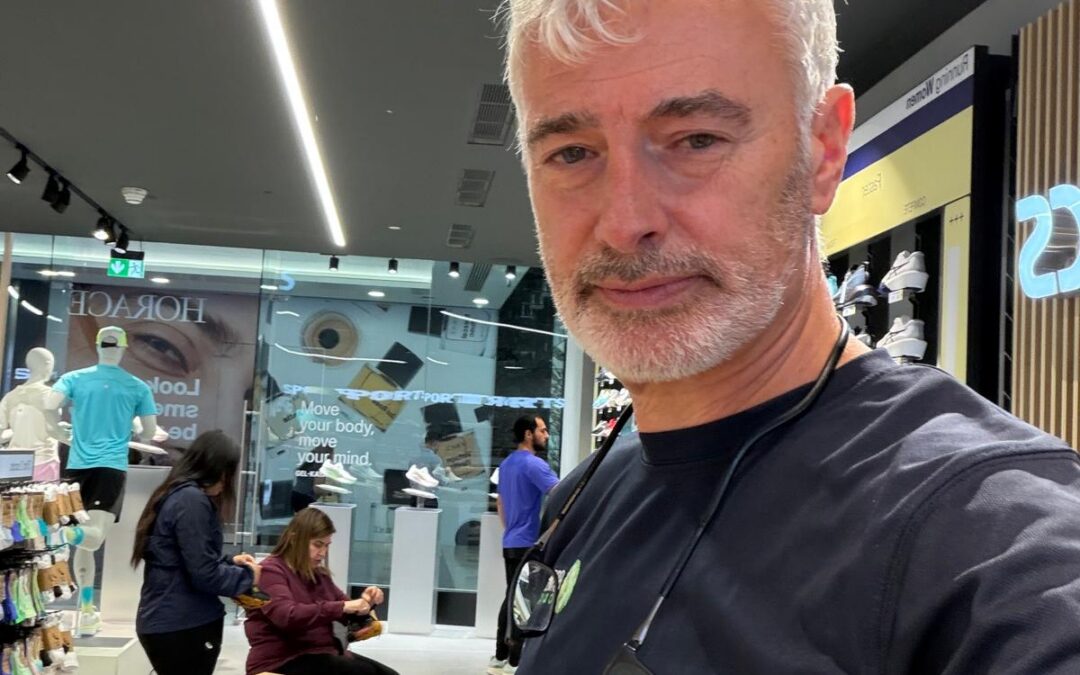
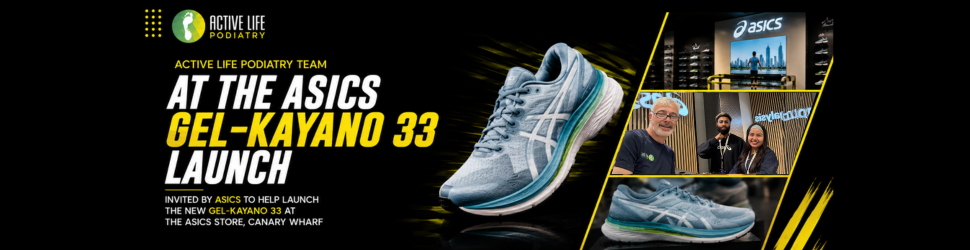
John and Aliza from the Active Life team were delighted to attend the launch of the new Asics GEL-KAYANO 33 trainers. They spent time with runners, chatting through injuries and looking at runners techniques and helping people to find the right shoe for their training. 

A word from John

John says “It’s always great to get out of the clinic and connect with the running community, and it’s great to meet so many keen runners and be part of such an exciting launch. We frequently give talks to running clubs and we welcome the opportunity to share our tips with other runners.”

How to find the right running trainers

As with most things in running, there’s no one size fits all. To truly activate your running potential, you need to understand your biomechanics, training load and whether the shoe is right for your body and goals.

A running assessment can help you understand the types of shoe to benefit your running and reduce risk of injury. Our state-of-the-art diagnostic equipment and analysis identifies inefficiencies and risks, while our expert team provides personalised advice to strengthen, protect, and support your training journey.

We also design and produce tailor-made, 3D printed custom orthoses (insoles) on site at our Fulham clinic to help give you the specialist support you need. 

Take steps to your personal best 

Want help finding the right shoe for your running style and goals? We can help. It’s the perfect time to tune up your biomechanics, recover right, and prepare your feet for future runs.

? Find us at: 1 Parsons Green Lane, Fulham, London, SW6 4HP

? Book your appointment here.

Take the next step toward better movement, faster recovery, and lasting performance.

Book your appointment today and step into your strongest stride yet.

Written by: John Durkin, Clinic Owner and Podiatrist
Published and clinically reviewed: 30 June 2026

We are here to help you to #TakeSteps

  • To an active recovery following injury
  • To active, healthy feet for your family
  • To a personal best
  • To an Active Life
Meet our new Podiatrist, Alexa

Meet our new Podiatrist, Alexa

Alexa, podiatrist at Active Life Podiatry

Meet our new Podiatrist, Alexa!

Joining us from Australia, Alexa is a deeply caring and warm podiatrist, committed to helping people feel better from the feet up. Her patients love her empathetic approach, a focus on holistic and sustainable treatment plans and her bubbly character.

Patients can expect treatment to begin with a thorough history-taking and biomechanical assessment of the entire lower limb, to identify and treat pain or discomfort.

Alexa is passionate about podiatry, as she experienced foot pain as a child and endured injuries as an active teenager, having played netball, basketball, athletics, swimming and dancing. As an adult, Alexa continues to remain active, having undertaken her Clinical Rehabilitative Pilates trying with Polestar Pilates, hiking on the weekends and strength training during the week. 

Alexa’s qualifications include a Bachelor of Health Science and Masters of Podiatric Medicine from Western Sydney University (Australia), and is strongly committed to ongoing education to help her patients.

Her musculoskeletal skill sets include trigger-point dry needling, Foot Mobilisation Therapy, EMS Dolorclast Shockwave Therapy, prolotherapy, gait and running assessments, lower body strength and conditioning training and orthotic therapy. Alexa also treats common foot issues related to skin and nails – having a gentle and conservative approach to treatment. She treats ingrown nails, corns, calluses and fungal nails. 

Alexa will be situated at both Parsons Green on Mondays and alternate Wednesdays and Fridays at our Putney Clinic.

Visit our booking page or call our team on 020 7381 6682 to book your appointment with Alexa today.


View our services or head over to the booking page to book your appointment today.

We are here to help you to #TakeSteps

  • To an active recovery following injury
  • To active, healthy feet for your family
  • To a personal best
  • To an Active Life
Chiropody vs Podiatry: The Modern Foot Care Specialist

Chiropody vs Podiatry: The Modern Foot Care Specialist

Chiropody vs Podiatry: The Modern Foot Care Specialist

When it comes to foot and lower limb treatment podiatry and chiropody are often used interchangeably. 

Chiropody originates from the Greek words “chiro” (meaning hand) and “pod” (meaning foot), emphasizing the manual aspect of foot care. 

The term “Podiatry” originates from “pod” (meaning hand) and “iatros”, which means “physician” in Greek. The change reflects the evolution of the podiatric profession as a recognised branch of modern medicine.

These two branches of medicine have virtually no differences in terms of education, scope of practice, and professional classifications. In this blog, we delve into the differences between podiatry and chiropody, the history and their roles in promoting foot health and overall well-being.

Podiatry is a medical profession focused on the diagnosis, treatment, and prevention of foot, ankle, and lower limb disorders. Podiatrists are extensively trained medical practitioners. Their comprehensive education covers both general medicine and specialised knowledge in podiatric medicine.

Reason for the change

The term chiropody has been traditionally used in the UK, and the term podiatry is recognised and used more internationally.

The UK adopted the term podiatry circa 2000 and it’s been used as the primary term ever since. 

Whilst there is still a use of both names, chiropodists are becoming more frequently referred to as podiatrists.

Scope of practice

Both podiatrists and chiropodists are highly trained medical professionals with extensive knowledge in podiatric medicine, allowing them to diagnose and treat a wide array of foot and ankle conditions, including complex surgical procedures.

They also carry out more basic foot care, such as routine nail trimming, callus removal, and general foot health advice.

Changing roles

As the world of modern technology has evolved, so has a podiatrist’s role. Skilled podiatrists are able to diagnose and carry out complex foot procedures and some surgeries, as well as musculoskeletal treatments and analysis.

What does a podiatrist do?

  • Podiatrists prevent, diagnose and treat feet and lower limb issues. At Active Life Podiatry our highly skilled team offer a range of services including:

    Routine Podiatry 

    • Ingrown or infected toenails
    • Fungal infections 
    • Involuted nails
    • Damaged nails 
    • Callus removal 
    • Verruca removal 
    • Painful corns 
    • Minor foot surgery

      Biomechanics and injury 

      • Biomechanical assessment 
      • Gait analysis 
      • Laser therapy 
      • Dry needling 
      • Acupuncture 
      • Injection therapy 
      • Foot and ankle mobilisation 

      Children’s Podiatry 

      • Ingrown or infected toenails
      • Fungal infections 
      • Involuted nails
      • Damaged nails 
      • Callus removal 
      • Verruca removal 
      • Painful corns 
      • Minor foot surgery 

      Children’s Injury Clinic 

      • Children’s biomechanical assessment 
      • Children’s mobility 
      • Developmental issues 
      • Children’s foot checks

        Orthoses

        We design and produce tailor-made orthosis or orthoses (such as insoles or shoe inserts) to support the foot, realign the feet, and correct gait problems or imbalance, as well as other walking or running pattern issues.

        Our orthotics are made in house for adults and children.

        To see a full list of our services, discover our price list or book your appointment with our expert team today. 

        So what’s the difference?

        In short – none! Both professions share a commitment to foot health and regardless of the title, seeking regular foot care from a qualified specialist is essential in maintaining healthy, happy feet.


To see a full list of our services, discover our price list or book your appointment with our expert team today. 

We are here to help you to #TakeSteps

  • To an active recovery following injury
  • To active, healthy feet for your family
  • To a personal best
  • To an Active Life

Introducing John Durkin

Introducing John Durkin

Meet Active Life Podiatry’s Founder and Principal Podiatrist

Clinic owner John Durkin founded the podiatry practice in Lillie Road, Fulham, in 1991 before moving the practice to its current location in Parsons Green in 2020.

John is a biomechanics specialist, treating sportsmen and women and helping them to perform better with bespoke orthoses. He has previously worked on international rugby players from teams including Harlequins, London Wasps and Rosylyn Park RFC.

A keen sportsman himself, being physically able and active is important to John and this drives him to want to help others get back on their feet. John regularly speaks at industry and educational events, as well as continuing his own education. And, more recently including undertaking the FA coaching certificate for his role as Manager at his daughter’s football team, Teddington Athletic.

John also has a busy family life and enjoys spending time with his wife, four children and dog Ozzy.

We get to know John a little better….

Why did you become a podiatrist?

I’ve always been passionate about helping people and I knew I wanted to work in a healthcare capacity. I liked the practical side of the job too and as soon as I started all those years ago I immediately knew this was the job for me.

What do you do at ALP?

I cover all aspects of podiatry from routine to MSK to complex biomechanics cases. When I’m not in clinic, I’m busy running the day-to-day at ALP, supporting the team and speaking or attending industry events.

What do you love most about your job?

There are so many things I love about my job, but the most rewarding thing has to be when a patient comes in with pain – sometimes a new pain, sometimes pain they’ve been battling with for a long time and I’m able to help them get back to normality and mobility. I’m such an active person myself and I really understand the impact and freedom that being able, fit and mobile can have on a person’s life.

What are your top 3 career highlights?

  • Working with professional rugby players
  • Earning my Master’s degree
  • Moving to our new location in Parsons Green

What are you most excited about for ALP in the future?

We’ve got so many great things coming up including offering new treatments, new equipment and we even make our own orthotics on site. I’m excited about so much it’s hard to narrow it down but I’d say my top two would be to continue to grow our business and employ excited, enthusiastic podiatrists to work in our team.

What is one thing people don’t know about you?

I’ve actually had plantar fasciitis twice! The first time was playing football in my teens and not being aware of the signs it got a lot worse. By the time I went to a podiatrist it was black and blue!

The second time I got it was a running injury which started in my knee (ACL), but luckily by then I knew the signs to look out for and was able to treat it quickly with orthoses and dry needling. I’m pleased to say it hasn’t returned since.

Unfortunately, it isn’t unusual for people with certain foot and leg biomechanics (for example a stiffness in ankles and calf muscles, but I can really empathise with my patients having experienced it first-hand so it feels really rewarding to be able to help them for good.

Think John or one of the team can help you? View our services or head over to the booking page to book your appointment today.

We are here to help you to #TakeSteps

  • To an active recovery following injury
  • To active, healthy feet for your family
  • To a personal best
  • To an Active Life