Running and Rugby Injuries: Advice from a Sports Podiatrist

Running and Rugby Injuries: Advice from a Sports Podiatrist

Running and rugby place very different demands on the body, but both can take their toll on the feet, ankles and lower limbs. Runners experience repeated loading over many miles, while rugby players must also manage sudden changes of direction, acceleration, contact and uneven ground.

So, how can you reduce your risk of injury, and when is a persistent niggle more than something that simply needs rest?

Aliza is a podiatrist with a Master’s degree in Podiatric Sports Medicine and a particular interest in sports injuries. She looks at how the whole lower limb is working to help identify why symptoms may have developed.

In this blog, Aliza answers some of the questions runners and rugby players commonly ask about recurring ankle sprains, gait analysis, injury prevention, orthotics and returning to sport safely.

Why do I keep getting ankle sprains when running or playing rugby?

A previous ankle sprain is one of the factors that can increase the likelihood of another. Although the pain and swelling may have settled, strength, balance, mobility and confidence in the ankle may not have fully recovered.

This can leave the ankle feeling unstable or more likely to give way, particularly when running on uneven ground or changing direction quickly during rugby.

Repeated ankle sprains should not simply be accepted as part of playing sport. A podiatry assessment can look at:

Treatment will depend on what the assessment finds. It may include targeted rehabilitation exercises, advice on managing your training load, footwear recommendations or, where appropriate, additional support.

Do I need a gait analysis or biomechanical assessment for a running injury?

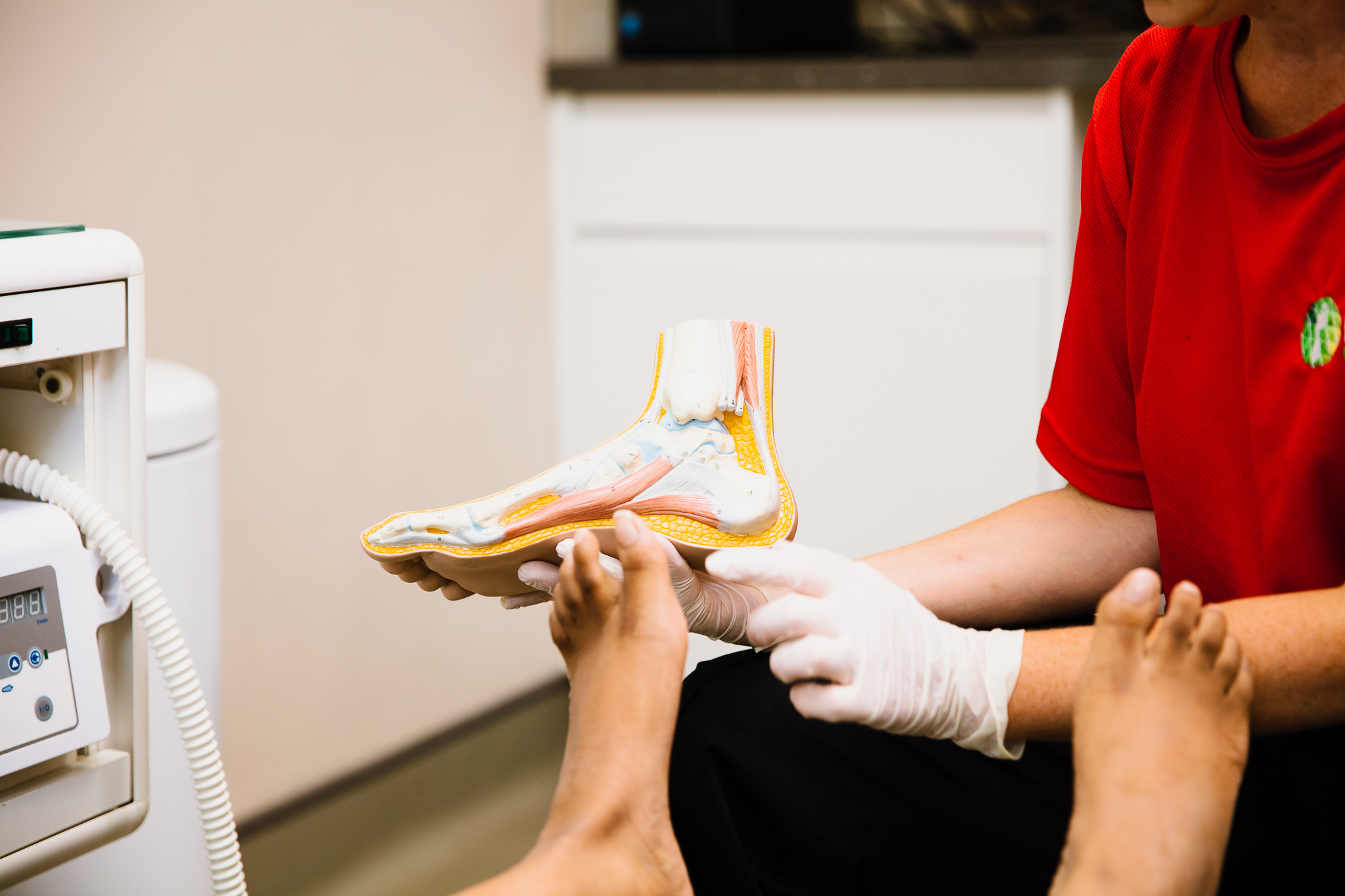
Not every ache or pain requires a gait analysis. However, a gait analysis or biomechanical assessment can be valuable when an injury keeps returning, symptoms appear during particular stages of a run, or the cause of the problem is unclear. At Active Life Podiatry, we assess more than the feet alone. We look at how you stand, walk and run, alongside your joint mobility, strength, stability and overall lower-limb function. A running assessment may help us understand:

  • How your feet and lower limbs move while running
  • Where and when particular areas are being loaded
  • Whether strength or mobility may be contributing to your symptoms
  • How your footwear interacts with your movement
  • Whether your current training demands may be affecting recovery

Gait analysis should not be used in isolation or treated as a way to identify one “perfect” running style. It forms part of a wider clinical assessment, helping your podiatrist build a more complete picture and develop a treatment plan that is personal to you.

What are the most common running and rugby injuries seen by podiatrists?

Some of the conditions we commonly assess include:

These problems do not always have one simple cause. Symptoms may develop following a sudden increase in training, changes in footwear or playing surface, reduced recovery, an underlying strength or mobility issue, or a combination of factors.

The location of pain alone does not always tell us why it is happening. A podiatrist can assess how the foot, ankle and wider lower limb are functioning and help identify the factors most relevant to your injury.

How can runners and rugby players help prevent injuries?

It is not possible to prevent every sports injury, but you can reduce avoidable risks by preparing your body for the demands being placed on it.

1. Build your training gradually

Sudden increases in distance, speed, intensity or frequency can place more demand on the body than it is ready to manage. Give yourself time to adapt, particularly when returning after a break or injury.

2. Include strength and balance work

Running and rugby require more than cardiovascular fitness. Strength, balance and control through the feet, ankles, calves, knees and hips can all support movement and help your body tolerate the demands of training.

3. Wear suitable footwear

Choose footwear that is comfortable, fits properly and is appropriate for your activity and playing surface. Replace running shoes or boots when they become excessively worn or no longer feel supportive.

4. Allow time for recovery

Rest and recovery are part of training. Persistent fatigue, soreness or a drop in performance may indicate that your body needs more time to recover.

5. Pay attention to recurring symptoms

A small niggle does not always mean you need to stop immediately, but pain that repeatedly returns should not be ignored. Addressing a problem early can help prevent it from becoming more difficult to manage.

When should a rugby player or runner see a podiatrist instead of just resting?

Rest may be appropriate for a minor ache after an unusually demanding session. However, rest alone does not always address the reason symptoms developed, which is why pain can return as soon as training resumes.

Consider booking a podiatry assessment if:

Seek urgent medical advice following a significant injury if you cannot bear weight, notice an obvious deformity, experience severe pain or swelling, or have numbness or a change in skin colour.

Can custom orthotics or insoles improve performance and prevent injury?

Custom orthotics can help some people manage particular injuries or biomechanical concerns, but they are not needed by every runner or rugby player. They should not be viewed as a shortcut to improved performance or a substitute for rehabilitation, strength and appropriate training.

Where clinically appropriate, orthotics may help redistribute pressure, reduce load on a painful area or improve comfort during activity. At Active Life Podiatry, they are only recommended following a comprehensive assessment and may be used alongside:

The aim is to find the right combination of support and rehabilitation for the individual, rather than simply to prescribe an insole to everyone experiencing pain.

The key takeaway

Recurring sports injuries are rarely something you should simply learn to live with. Whether you are repeatedly rolling your ankle on the rugby pitch or experiencing pain every time you increase your running distance, a thorough assessment can help identify what may be contributing to the problem.

The right treatment will depend on you, your injury and the demands of your sport. Addressing symptoms early can support a safer recovery, more consistent training and greater confidence when you return to activity.

Don’t let a recurring injury hold back your training

If you’re experiencing a running or rugby-related injury, the team at Active Life Podiatry can help. We offer biomechanical assessments, gait and running analysis, injury treatment, rehabilitation, footwear advice and custom orthotics where clinically appropriate.

📍 Find us at: 1 Parsons Green Lane, Fulham, London, SW6 4HP

đź’» Book your appointment here.

Take the next step towards better movement, a confident recovery and lasting performance.

Written by: Aliza Abbas, Podiatrist
Published and clinically reviewed: 1 October 2026

Clinical references 

Written by: Aliza Abbas, Podiatrist
Published and clinically reviewed: 1 October 2026

Take Steps to Peak Performance with 10% off in November

Take Steps to Peak Performance with 10% off in November

Take Steps to Peak Performance: 10% Off Specialist Podiatry Care for Fulham 10K Runners 

Whether you’re gearing up for the Fulham 10K, managing a training niggle, or giving your feet some much-needed post-race TLC, Active Life Podiatry is here to keep you running strong.

Located just minutes from the Fulham 10K route in Parsons Green, our specialist podiatry team supports runners at every stage; from training and prevention to recovery and rehabilitation.

Why Runners Choose Active Life Podiatry

Running places huge demands on your feet and lower limbs. Our biomechanical and gait analysis services help identify imbalances, inefficiencies, and potential injury risks, giving you a clear picture of how your body moves so you can run smarter and more efficiently.

Our services include:

  • Biomechanical Assessments : In-depth gait and movement analysis to understand your stride, posture, and loading patterns.

  • Sports & Recovery Treatments: Reduce muscle fatigue, speed up recovery, and stay race-ready.

  • Custom Orthotics & Footwear Advice: Support your feet with our in-house, precision-made orthotics and expert shoe guidance.

  • Injury Treatment & Rehabilitation: Targeted recovery plans to get you back on track safely and stronger than before.

Exclusive Offer for Fulham 10K Runners

Show your Fulham 10K race entry and enjoy 10% off pre and post run treatments between 1st – 30th November 2025.

It’s the perfect time to tune up your biomechanics, recover right, and prepare your feet for future runs.

? Find us at: 1 Parsons Green Lane, Fulham, London, SW6 4HP

? Book your appointment here.

Take the next step toward better movement, faster recovery, and lasting performance.

Book your appointment today and step into your strongest stride yet.

Written by: John Durkin, Clinic Owner and Podiatrist
Published and clinically reviewed: 1 November 2025

We are here to help you to #TakeSteps

  • To an active recovery following injury
  • To active, healthy feet for your family
  • To a personal best
  • To an Active Life
A Podiatrist’s guide to choosing the right running shoes 

A Podiatrist’s guide to choosing the right running shoes 

Choosing the right running shoes is essential for comfort, performance and injury prevention. There are many things to consider including your running surface (for example cross-country versus pavement or trail running) and distance can also play a factor too.

With so many choices available, it can be overwhelming and hard to know where to start. 

We’ve put together these handy tips to consider when you’re buying your next pair of running trainers.

1. Understand your foot type

Your first step is to book a running assessment with us. We will determine if you have a neutral, overpronation, or underpronation (supination) foot type and advise on the best type of running shoe and cushioning for you. 

We do this by observing your gait and form n the clinic with 3D technology to track your movements on our treadmill.

Book your gait analysis here.

2. Lean into expert advice 

Be fussy and take your time when choosing running shoes. The experts in running shoes at your local store can guide you to the right pair based on your needs and running style.

3. Try on shoes later in the day

This will ensure the fit is right and accounts for any foot swelling. 

Different socks can affect how the shoes feel so stick to your usual pair for an accurate assessment.

4. Use the ‘thumb-width’ rule

Aim for a finger’s width between your longest toe and the shoe end. This prevents cramping, nail damage and allows natural foot movement.

5. Don’t skip local retails for online deals

Supporting local keeps expertise alive and you’ll often get a much better service. Cheap, online deals may seem tempting but local shops provide invaluable knowledge for your foot health. 

Shopping local also supports the community, creates jobs and often has a smaller environmental impact. 

There are plenty of great local retailers near Active Life Poditry’s clinic in Fulham and Putney. Or, if you’re venturing a little further out – give our friends at Up and Running in Richmond a visit. Active Life Podiatry customers will get 10% off in-store by quoting ALP10

Book your gait analysis as a standalone assessment or an add-on to your routine appointment by calling our team on 020 7381 6682


View our services or head over to the booking page to book your appointment today.

We are here to help you to #TakeSteps

  • To an active recovery following injury
  • To active, healthy feet for your family
  • To a personal best
  • To an Active Life

Chiropody vs Podiatry: The Modern Foot Care Specialist

Chiropody vs Podiatry: The Modern Foot Care Specialist

Chiropody vs Podiatry: The Modern Foot Care Specialist

When it comes to foot and lower limb treatment podiatry and chiropody are often used interchangeably. 

Chiropody originates from the Greek words “chiro” (meaning hand) and “pod” (meaning foot), emphasizing the manual aspect of foot care. 

The term “Podiatry” originates from “pod” (meaning hand) and “iatros”, which means “physician” in Greek. The change reflects the evolution of the podiatric profession as a recognised branch of modern medicine.

These two branches of medicine have virtually no differences in terms of education, scope of practice, and professional classifications. In this blog, we delve into the differences between podiatry and chiropody, the history and their roles in promoting foot health and overall well-being.

Podiatry is a medical profession focused on the diagnosis, treatment, and prevention of foot, ankle, and lower limb disorders. Podiatrists are extensively trained medical practitioners. Their comprehensive education covers both general medicine and specialised knowledge in podiatric medicine.

Reason for the change

The term chiropody has been traditionally used in the UK, and the term podiatry is recognised and used more internationally.

The UK adopted the term podiatry circa 2000 and it’s been used as the primary term ever since. 

Whilst there is still a use of both names, chiropodists are becoming more frequently referred to as podiatrists.

Scope of practice

Both podiatrists and chiropodists are highly trained medical professionals with extensive knowledge in podiatric medicine, allowing them to diagnose and treat a wide array of foot and ankle conditions, including complex surgical procedures.

They also carry out more basic foot care, such as routine nail trimming, callus removal, and general foot health advice.

Changing roles

As the world of modern technology has evolved, so has a podiatrist’s role. Skilled podiatrists are able to diagnose and carry out complex foot procedures and some surgeries, as well as musculoskeletal treatments and analysis.

What does a podiatrist do?

  • Podiatrists prevent, diagnose and treat feet and lower limb issues. At Active Life Podiatry our highly skilled team offer a range of services including:

    Routine Podiatry 

    • Ingrown or infected toenails
    • Fungal infections 
    • Involuted nails
    • Damaged nails 
    • Callus removal 
    • Verruca removal 
    • Painful corns 
    • Minor foot surgery

      Biomechanics and injury 

      • Biomechanical assessment 
      • Gait analysis 
      • Laser therapy 
      • Dry needling 
      • Acupuncture 
      • Injection therapy 
      • Foot and ankle mobilisation 

      Children’s Podiatry 

      • Ingrown or infected toenails
      • Fungal infections 
      • Involuted nails
      • Damaged nails 
      • Callus removal 
      • Verruca removal 
      • Painful corns 
      • Minor foot surgery 

      Children’s Injury Clinic 

      • Children’s biomechanical assessment 
      • Children’s mobility 
      • Developmental issues 
      • Children’s foot checks

        Orthoses

        We design and produce tailor-made orthosis or orthoses (such as insoles or shoe inserts) to support the foot, realign the feet, and correct gait problems or imbalance, as well as other walking or running pattern issues.

        Our orthotics are made in house for adults and children.

        To see a full list of our services, discover our price list or book your appointment with our expert team today. 

        So what’s the difference?

        In short – none! Both professions share a commitment to foot health and regardless of the title, seeking regular foot care from a qualified specialist is essential in maintaining healthy, happy feet.


To see a full list of our services, discover our price list or book your appointment with our expert team today. 

We are here to help you to #TakeSteps

  • To an active recovery following injury
  • To active, healthy feet for your family
  • To a personal best
  • To an Active Life

Activate your personal best

Activate your personal best

Activate your personal best

We have two clinics, our flagship in Parsons Green and our second clinic in Fulham. Lots of our patients are keen runners and many enjoy the challenge of local running clubs and races.

We’ve helped thousands of patients overcome injury and get back on their feet, as well as supporting many on their performance journey; with biomechanical assessments, gait analysis and more.

Will this be the year your activate your personal best?

We’ve shared a few of our favourite races and running clubs, but there a lots more available. If you’d like to add your favourite to the recommendations, please email us at [email protected]


Join a running club

Whether you’re looking for a serious sweat, scenic river runs or a light jog to a different coffee shop, we’re spoilt for choice in the Fulham, Putney and surrounding areas.

Clubs have members of all speeds and abilities, so you’ll always be able to find someone at a similar ability or just a little bit faster to work towards. Even if you don’t want to enter races, simply improving your fitness and being a part of something is a great way to stay active.

Spending time with people that share your goals can be hugely motivating and help foster great new friendships.

Our top picks:


Running in a race

There’s nothing like a hard deadline to get you motivated! Whether you’re a first time runner or an esteemed athlete – there’s a race for you.

If you’re in a running club already, you’ll more than likely be taking part in races with people you already know so you’ll have you’re you’ll own personal squad of cheerleaders.

Here are our top picks for upcoming local races:

February

March

April

May

June

September


Whether it’s a biomechanical assessment and gait analysis or a pain management plan, our experts are on hand to help. You don’t have to go fast, you just have to go. Let us help you get there.

#TakeSteps to look after your feet

Active Life have invested in high-tech specialist equipment and combined with their expert knowledge and technology can provide useful advice on your personal running style and how to improve.