

The short answer
Plantar fasciitis, more correctly called plantar fasciopathy, is pain under the heel caused by irritation of the plantar fascia, the thick band of tissue that runs along the sole of your foot from your heel to your toes. Our podiatrists assess why it has developed, then treat the cause as well as the pain, with exercises, footwear advice, orthoses and in-clinic treatments such as shockwave or dry needling where they are right for you.
Symptoms
Plantar fasciitis usually shows up as:
- pain on the bottom of the heel, sometimes spreading into the arch
- pain that is worst with your first steps in the morning or after sitting for a while
- pain that eases as you get moving, then returns after long periods on your feet
- tenderness when you press under the heel
The location of pain alone does not always tell us why it is happening. Other problems can cause heel pain too, which is why we assess before we treat.
When to seek urgent advice
Seek urgent medical advice following a significant injury if you cannot bear weight, notice an obvious deformity, experience severe pain or swelling, or have numbness or a change in skin colour.
What causes it?
Heel pain does not always have one simple cause. Symptoms may develop following a sudden increase in training, changes in footwear or playing surface, reduced recovery, an underlying strength or mobility issue, or a combination of factors.
It isn’t unusual in people with certain foot and leg biomechanics, for example stiffness in the ankles and calf muscles. That is why a biomechanical assessment is usually the starting point.
How we treat it
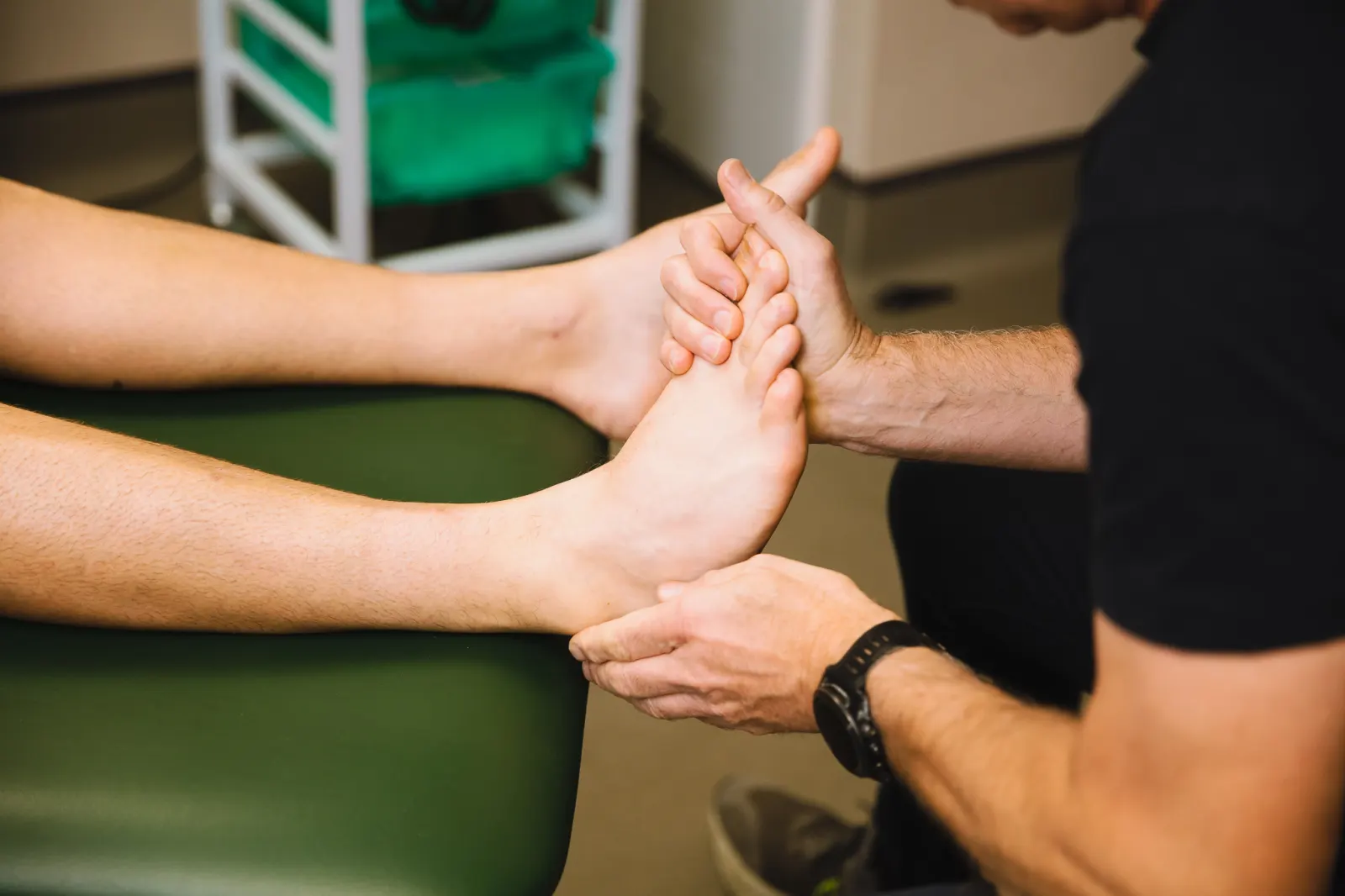
Your first appointment is a full assessment of how you stand, walk and, if you run, how you run. From this we form a treatment plan which may include some of the following:
Our post-treatment plans often include things you can do at home, at your desk or on the school run. We adapt your treatment to suit your needs and your lifestyle.
Who you’ll see
 John DurkinClinic Owner & Biomechanics SpecialistView full profile: John Durkin
 Aliza AbbasPodiatrist specialising in sports injury preventionView full profile: Aliza Abbas
 Penny KayPodiatrist specialising in dance injury & rehabView full profile: Penny Kay
 Marc BartonPrincipal Podopaediatrician (children’s foot health specialist)View full profile: Marc Barton
Appointment length and price
- First appointment
- 45 minutesMinimum for new musculoskeletal and sports injury patients
- With a senior podiatrist
- £170
- Orthoses or running assessment
- £2201 hour
Questions patients ask
How long is the first appointment for heel pain?
New patients with musculoskeletal conditions and sports injuries need a minimum 45-minute appointment. It is £170 with one of our senior podiatrists.
Will I need orthotics (custom insoles)?
Not necessarily. Custom orthotics can help some people, but they are only recommended following a comprehensive assessment, and they are used alongside rehabilitation exercises, footwear advice and other treatment.
Should I keep running?
A small niggle does not always mean you need to stop immediately, but pain that repeatedly returns should not be ignored. We will advise on managing your training while you recover.
How long will it take to get better?
It depends on how long you have had it:
- Acute cases (under 6 weeks) often resolve within 6 to 8 weeks.
- Sub-acute or moderate cases (1 to 6 months) usually take 8 to 12 weeks of treatment.
- Chronic cases (over 6 months) can take longer.
In short, the sooner it is treated, the sooner you recover.
Can I use my private health insurance?
We accept some insurance cases. If you would like us to invoice your insurer, please bring proof that your insurance covers your treatment to your appointment: your authorisation code and any correspondence from your insurer about your cover. See the insurers we work with.
Which clinic should I book?
Biomechanics and injury appointments are available at both clinics: Fulham (1 Parsons Green Lane, SW6 4HP) and Putney (266 Upper Richmond Road, SW15 6TQ).