Running and Rugby Injuries: Advice from a Sports Podiatrist

Running and Rugby Injuries: Advice from a Sports Podiatrist
Running and rugby place very different demands on the body, but both can take their toll on the feet, ankles and lower limbs. Runners experience repeated loading over many miles, while rugby players must also manage sudden changes of direction, acceleration, contact and uneven ground.

Why do I keep getting ankle sprains when running or playing rugby?

A previous ankle sprain is one of the factors that can increase the likelihood of another. Although the pain and swelling may have settled, strength, balance, mobility and confidence in the ankle may not have fully recovered.

This can leave the ankle feeling unstable or more likely to give way, particularly when running on uneven ground or changing direction quickly during rugby.
Repeated ankle sprains should not simply be accepted as part of playing sport. A podiatry assessment can look at:
  • Your ankle strength and range of movement
  • Balance and stability
  • How your foot and ankle respond to loading
  • Your walking and running pattern
  • Your footwear
  • The demands of your sport and current training
Treatment will depend on what the assessment finds. It may include targeted rehabilitation exercises, advice on managing your training load, footwear recommendations or, where appropriate, additional support.


Do I need a gait analysis or biomechanical assessment for a running injury?

Not every ache or pain requires a gait analysis. However, a gait analysis or biomechanical assessment can be valuable when an injury keeps returning, symptoms appear during particular stages of a run, or the cause of the problem is unclear.

At Active Life Podiatry, we assess more than the feet alone. We look at how you stand, walk and run, alongside your joint mobility, strength, stability and overall lower-limb function.
A running assessment may help us understand:
  • How your feet and lower limbs move while running
  • Where and when particular areas are being loaded
  • Whether strength or mobility may be contributing to your symptoms
  • How your footwear interacts with your movement
  • Whether your current training demands may be affecting recovery
Gait analysis should not be used in isolation or treated as a way to identify one “perfect” running style. It forms part of a wider clinical assessment, helping your podiatrist build a more complete picture and develop a treatment plan that is personal to you.

What are the most common running and rugby injuries seen by podiatrists?

Some of the conditions we commonly assess include:

  • Plantar heel pain, sometimes known as plantar fasciitis
  • Achilles tendon pain
  • Pain around the shin
  • Pain at the front or side of the knee
  • Ankle sprains and instability
  • Stress-related bone injuries
  • Pain around the ball of the foot
  • Blisters, damaged toenails and other footwear-related problems
These problems do not always have one simple cause. Symptoms may develop following a sudden increase in training, changes in footwear or playing surface, reduced recovery, an underlying strength or mobility issue, or a combination of factors.
The location of pain alone does not always tell us why it is happening. A podiatrist can assess how the foot, ankle and wider lower limb are functioning and help identify the factors most relevant to your injury.

How can runners and rugby players help prevent injuries?

It is not possible to prevent every sports injury, but you can reduce avoidable risks by preparing your body for the demands being placed on it.
Build your training gradually
Sudden increases in distance, speed, intensity or frequency can place more demand on the body than it is ready to manage. Give yourself time to adapt, particularly when returning after a break or injury.
Include strength and balance work
Running and rugby require more than cardiovascular fitness. Strength, balance and control through the feet, ankles, calves, knees and hips can all support movement and help your body tolerate the demands of training.
Wear suitable footwear
Choose footwear that is comfortable, fits properly and is appropriate for your activity and playing surface. Replace running shoes or boots when they become excessively worn or no longer feel supportive.
Allow time for recovery
Rest and recovery are part of training. Persistent fatigue, soreness or a drop in performance may indicate that your body needs more time to recover.
Pay attention to recurring symptoms
A small niggle does not always mean you need to stop immediately, but pain that repeatedly returns should not be ignored. Addressing a problem early can help prevent it from becoming more difficult to manage.

When should a runner or rugby player see a podiatrist instead of just resting?

Rest may be appropriate for a minor ache after an unusually demanding session. However, rest alone does not always address the reason symptoms developed, which is why pain can return as soon as training resumes.
Consider booking a podiatry assessment if:
  • Pain has persisted for more than a week or two
  • Symptoms return whenever you run or play
  • You repeatedly sprain or roll the same ankle
  • Pain is affecting your performance or changing how you move
  • You are struggling to return to sport after an injury
  • You experience swelling, instability or reduced movement
  • You are unsure whether it is safe to continue training
Seek urgent medical advice following a significant injury if you cannot bear weight, notice an obvious deformity, experience severe pain or swelling, or have numbness or a change in skin colour.

Can custom orthotics or insoles improve performance and prevent injury?

Custom orthotics can help some people manage particular injuries or biomechanical concerns, but they are not needed by every runner or rugby player. They should not be viewed as a shortcut to improved performance or a substitute for rehabilitation, strength and appropriate training.
Where clinically appropriate, orthotics may help redistribute pressure, reduce load on a painful area or improve comfort during activity. At Active Life Podiatry, they are only recommended following a comprehensive assessment and may be used alongside:
  • Rehabilitation exercises
  • Training and recovery advice
  • Footwear recommendations
  • Strength and mobility work
  • Other appropriate treatment
The aim is to find the right combination of support and rehabilitation for the individual—not simply to prescribe an insole to everyone experiencing pain.

The key takeaway

Recurring sports injuries are rarely something you should simply learn to live with. Whether you are repeatedly rolling your ankle on the rugby pitch or experiencing pain every time you increase your running distance, a thorough assessment can help identify what may be contributing to the problem.
The right treatment will depend on you, your injury and the demands of your sport. Addressing symptoms early can support a safer recovery, more consistent training and greater confidence when you return to activity.
Don’t let a recurring injury hold back your training
If you’re experiencing a running or rugby-related injury, the team at Active Life Podiatry can help. We offer biomechanical assessments, gait and running analysis, injury treatment, rehabilitation, footwear advice and custom orthotics where clinically appropriate.

📍 Find us at: 1 Parsons Green Lane, Fulham, London, SW6 4HP

💻 Book your appointment here.

Take the next step toward better movement, faster recovery, and lasting performance.

Book your appointment today and step into your strongest stride yet.

Written by: Penny Kay, Podiatrist
Published and clinically reviewed: 31 July 2026
We’re here to help you to #TakeSteps
  • To an active recovery following injury
  • To active, healthy feet for your family
  • To a personal best
  • To an Active Life

Penny Kay
Podiatrist

We are here to help you to #TakeSteps

  • To an active recovery following injury
  • To active, healthy feet for your family
  • To a personal best
  • To an Active Life
7 Foot Health Mistakes Podiatrists Want You to Stop Making

7 Foot Health Mistakes Podiatrists Want You to Stop Making

The own goals of podiatry patients 

Just for fun, we’ve rounded up our favourite red card health habits heard in clinic. There’s no need for own goals when it comes to your feet health. If you’re in pain, come and see us so we can get you back up and running again from park to pitch. 

“I’ll start wearing my orthotics tomorrow…”

Yet six month later, they’re still in the box…

“Chat GPT said it would go away on it’s own”

Spoiler, it, it fact, did not go away on it’s own.

“Honestly, it’s really not that painful”

As they limp away crying 

“My trainers are still totally fine. There’s load of life left in them.”

They’re five years old and completely worn out.

“I don’t know where the pain came from…”

Has been wearing £2 flip-flops every day for two months.

It doesn’t hurt unless I walk

Cue the face palm emoji…

“It’s only a little blister”

Three weeks later, it’s infected and they’ve finally booked in.

Unlike England, we can help you bring it home.

Ooft… too soon? We can help you reach your personal and active goals. Take steps towards an active life today. 

📍 Find us at: 1 Parsons Green Lane, Fulham, London, SW6 4HP

💻 Book your appointment here.

Take the next step toward better movement, faster recovery, and lasting performance.

Book your appointment today and step into your strongest stride yet.

Written by: John Durkin, Clinic Owner and Podiatrist
Published and clinically reviewed: 16th July 2026

We are here to help you to #TakeSteps

  • To an active recovery following injury
  • To active, healthy feet for your family
  • To a personal best
  • To an Active Life
Carbon-Plated Running Shoes: Can “Super Shoes” Improve Your Performance?

Carbon-Plated Running Shoes: Can “Super Shoes” Improve Your Performance?

Can marathon-winning trainers make you a better runner?

Elite marathon runners are crossing finish lines in super shoes and breaking records. But what does that actually mean for everyday runners.

Super shoes. Carbon plates. PEBA foam. But what actually matters?

You’ve probably heard the claims. More speed. More bounce. Better running economy. Here’s the simple version.

The foam matters more than you think…

Traditional running shoes have long used EVA foam, a lightweight material that absorbs shock well. Newer “super shoes” use foams such as PEBA and Pebax, which are lighter and more responsive, helping runners feel quicker and more efficient.

What about the carbon plate?

The carbon plate isn’t necessarily acting like a spring catapulting you forwards. Research suggests it may actually play a bigger role in reducing stress through the foot and protecting joints in the forefoot from repetitive load.

Who benefits most?

The biggest gains tend to be seen in runners with a faster cadence and quicker pace. But they don’t always create the same improvement at slower speeds.

One thing to be aware of

Softer, lighter foams can also mean less resistance to excessive foot movement. For some runners, this may increase the risk of certain injuries.

The takeaway

Super shoes can absolutely have their place, but they’re not magic shoes. Because of their cost and lower durability, they’re often best kept for key sessions and race day.

Want help finding the right shoe for your running style and goals? We can help.

Take steps to your personal best

It’s the perfect time to tune up your biomechanics, recover right, and prepare your feet for future runs.

📍 Find us at: 1 Parsons Green Lane, Fulham, London, SW6 4HP

💻 Book your appointment here.

Take the next step toward better movement, faster recovery, and lasting performance.

Book your appointment today and step into your strongest stride yet.

Written by: John Durkin, Clinic Owner and Podiatrist
Published and clinically reviewed: 30 May 2026

We are here to help you to #TakeSteps

  • To an active recovery following injury
  • To active, healthy feet for your family
  • To a personal best
  • To an Active Life
Dance Podiatry in London: Foot and Ankle Care for Dancers

Dance Podiatry in London: Foot and Ankle Care for Dancers

Reach your peak with Penny

Your feet are your foundation. Every jump, turn and landing places huge demand on them and even small issues can quickly affect how you move, train and perform.

More dancers and gymnasts are choosing to work with a podiatrist who truly understands the physical demands of dance.

Whether you are experiencing a foot issue or simply want to take a proactive approach to injury prevention, specialist podiatry care can help you stay strong, stable and confident in your movement. 

Penny is our in-house dance, gymnastics and sports injury specialist. As a former ballet teacher and examiner, she’s an advocate for helping people, particularly dancers, move better and stay pain free. 

Her skill set includes Gait and Foot Pressure Analysis and orthotic therapy,  Point of Care Ultrasound, Laser Therapy, Shockwave therapy and exercise rehabilitation.

Whether you’re dancing or not, she believes foot health is paramount in everyone’s daily life. 

How Podiatry Can Help Dancers

A podiatrist can provide both treatment and preventative care, helping dancers maintain healthy feet throughout their training and performance schedules.

Common podiatry treatments for dancers include:

Skin and nail care
Treatment for corns, calluses, blisters, and nail issues caused by pressure and friction in dance shoes.

Biomechanical assessments
An assessment of how your feet move and absorb load during activity. This helps identify areas of stress that may contribute to pain or injury.

Advice on footwear and pressure management
Guidance on managing pressure points in dance shoes and pointe work to reduce irritation and injury risk.

Injury support and prevention
Treatment and advice for common overuse injuries affecting dancers, alongside strategies to help keep you training consistently.

Specialist Dance Podiatry at Active Life Podiatry

Whether you are experiencing a foot issue or simply want to take a proactive approach to injury prevention, specialist podiatry care can help you stay strong, stable and confident in your movement.

At Active Life Podiatry, Penny works with dancers to provide personalised care that supports both foot health and performance.

If you’re a dancer and your feet could benefit from expert attention, booking a podiatry appointment could be the first step in keeping you dancing comfortably and confidently.

Read Penny’s advice on common foot and ankle injuries in dancers and gymnasts.

Book your appointment today and step into your strongest stride yet.

Written by: John Durkin, Clinic Owner and Podiatrist
Published and clinically reviewed: 12 March 2026

We are here to help you to #TakeSteps

  • To an active recovery following injury
  • To active, healthy feet for your family
  • To a personal best
  • To an Active Life

Help end shoe poverty today

Help end shoe poverty today

Taking steps to end shoe poverty. But we need your help. 

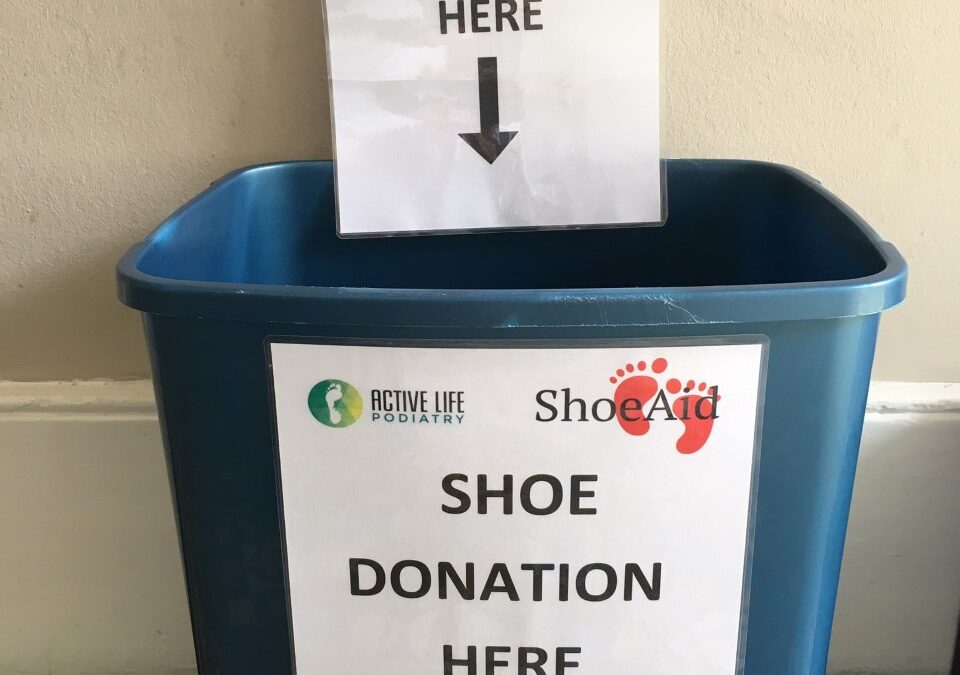
Active Life Podiatry are proudly partnering with Shoe Aid for a third year to help end shoe poverty globally.

Shoe Aid is a UK based charity that sources and supplies free footwear through a collection and distribution network, so no child or adult has to go without shoes.

With your help, we delivered hundreds of pairs of shoes to people in need. For the third year, we’re collecting shoes until 30th November 2025.

How you can help

You can help to make a difference and change lives by donating your old shoes and giving them a second life to someone in need.

Simply donate your shoes to Active Life Podiatry’s drop off point at 1 Parsons Green Lane and we’ll send them to Shoe Aid for you. Or, make a donation directly.

Did you know?

  • 1.5 billion people worldwide without shoes, including 300 million children. 
  • 2 million shoes are thrown into landfill every week.
  • 1 pair of shoes takes upwards of 1000 years to biodegrade.

Shoe Aid is tackling the problem, by educating on the importance of recycling and repurposing footwear.
They distribute tens of thousands of pairs of shoes to over 15 countries. Simply donate shoes you no longer wear to our Parsons Green Clinic, and we’ll take care of the rest.

Together, we can get steps to end shoe poverty globally. 


Written by: John Durkin, Clinic Owner and Podiatrist
Published and clinically reviewed: 23 Nov 2025


    If you’d like to support Shoe aid directly, donate via the button below.

    Did you know?

    • 1.5 billion people worldwide without shoes, including 300 million children. 
    • 2 million shoes are thrown into landfill every week.
    • 1 pair of shoes takes upwards of 1000 years to biodegrade.