
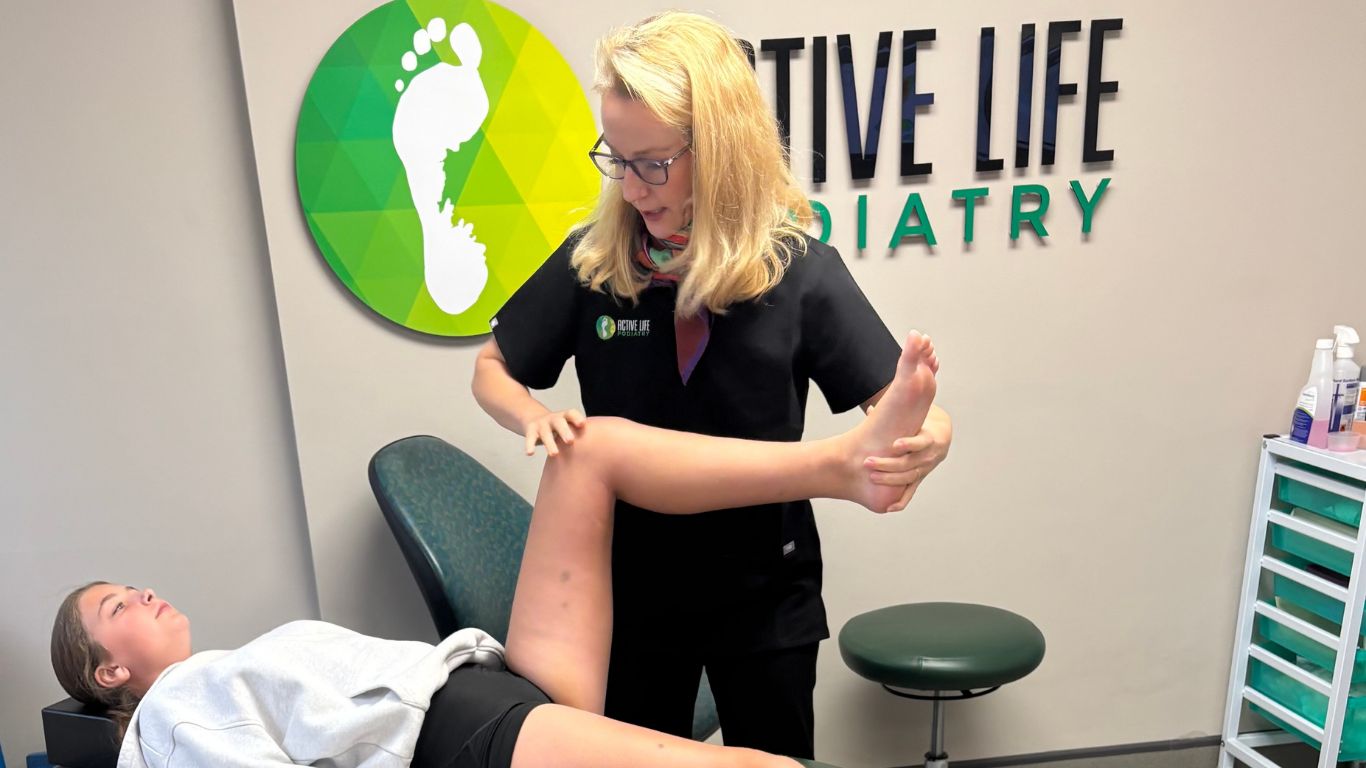
Why are dancers and gymnasts so prone to foot and ankle injuries and when is pain more than just a passing niggle? Penny is our in-house dance, gymnast and sports injury specialist. As a former ballet teacher and examiner, she’s an advocate for helping people stay pain-free.
In this blog, Penny answers the most common questions about injury prevention, early warning signs, orthotics and keeping your feet performance-ready.
1. Why do dancers and gymnasts get so many foot and ankle injuries, and how can they prevent them?
Dancers and gymnasts place extraordinary demands on their feet and ankles. As I often say, the people who do the most washing up tend to break the most glasses. It’s not because they’re careless; it’s simply because they’re using them far more often. The same principle applies to the feet and ankles of dancers and gymnasts.
Their sports require repetitive jumping, landing, turning, balancing and working at the extreme ranges of movement, often for many hours each week. The foot and ankle are repeatedly exposed to high forces, sometimes in positions that most people would never achieve.
Injury risk increases when factors such as fatigue, rapid increases in training load, inadequate recovery, poor scheduling of training and performances, suboptimal nutrition, insufficient strength, technique errors, unsuitable footwear or returning too quickly after injury are added into the mix.
The best strategies include sensible load management, good strength and conditioning, adequate rest and sleep, proper nutrition, addressing small problems before they become major injuries and ensuring technique is regularly monitored and refined.
2. When should a dancer or gymnast see a podiatrist instead of just resting?
Rest may be appropriate for minor aches and pains. However, if symptoms persist for more than a week or two, repeatedly return or affect performance, it’s worth seeking professional advice.
A musculoskeletal podiatrist who understands the demands of dance can assess how the foot, ankle and entire lower limb function together. We look at movement patterns, strength, flexibility, training loads, footwear and biomechanics to identify why a problem has developed.
Early assessment can often prevent a small issue from becoming a prolonged injury resulting in significant time away from training.
3. What are the most common injuries you see in dancers and gymnasts?
The most common problems I see tend to fall into two categories: injuries and general foot health concerns. While many of these are shared by dancers, gymnasts and other athletes, dancers can also present with issues related to pointe work and the demands of repeatedly working at the extreme ranges of foot and ankle movement.
Injuries
- Ankle sprains and instability
- Achilles tendon pain
- Plantar heel pain
- Stress reactions and stress fractures
- Tendon injuries around the foot and ankle
- Joint irritation and impingement
- Toe injuries, particularly involving the big toe and/or second metatarsal joint
- Sesamoid injuries
General Foot Health Concerns
- Blisters, corns and skin problems
- Nail trauma and ingrown toenails
- Concerns regarding foot appearance and aesthetics
- Bunions
Many of these conditions can be managed successfully when identified early, which is why I encourage dancers and gymnasts not to ignore persistent symptoms.
4. What’s one mistake you see dancers or gymnasts make with their foot health?
Ignoring the early warning signs.
Many performers are incredibly disciplined and resilient, which is a strength, but it can also mean they normalise pain and continue training through problems that would be much easier to treat in the early stages.
A small ‘niggle’ is often the body’s way of asking for attention. Addressing issues early is usually far more effective than waiting until they become performance-limiting injuries.
5. Can orthotics or foot support help dancers and gymnasts without affecting performance?
Yes, but only if they are prescribed for the right reasons. Not every dancer or gymnast needs orthotics and they are never a substitute for strength, conditioning or good technique. However, in some cases they can help reduce excessive loading on injured tissues, improve comfort and support rehabilitation.
For dancers, orthotics are usually worn in everyday footwear rather than during class or performance. The aim is often to help manage symptoms and recovery outside the studio, allowing the performing athlete to continue training more comfortably and efficiently.
The key is that any intervention should be individualised. What works for one dancer or gymnast may be completely inappropriate for another.
Got a niggle? Don’t wait…
Don’t let a persistent niggle hold back your performance. If you’re experiencing foot or ankle pain, book an assessment with Penny at Active Life Podiatry.
📍 Find us at: 1 Parsons Green Lane, Fulham, London, SW6 4HP
💻 Book your appointment here.
Take the next step toward better movement, faster recovery, and lasting performance.
Book your appointment today and step into your strongest stride yet.
We are here to help you to #TakeSteps
- To an active recovery following injury
- To active, healthy feet for your family
- To a personal best
- To an Active Life